


Why Quality Matters When Choosing Tea & Dry Fruits
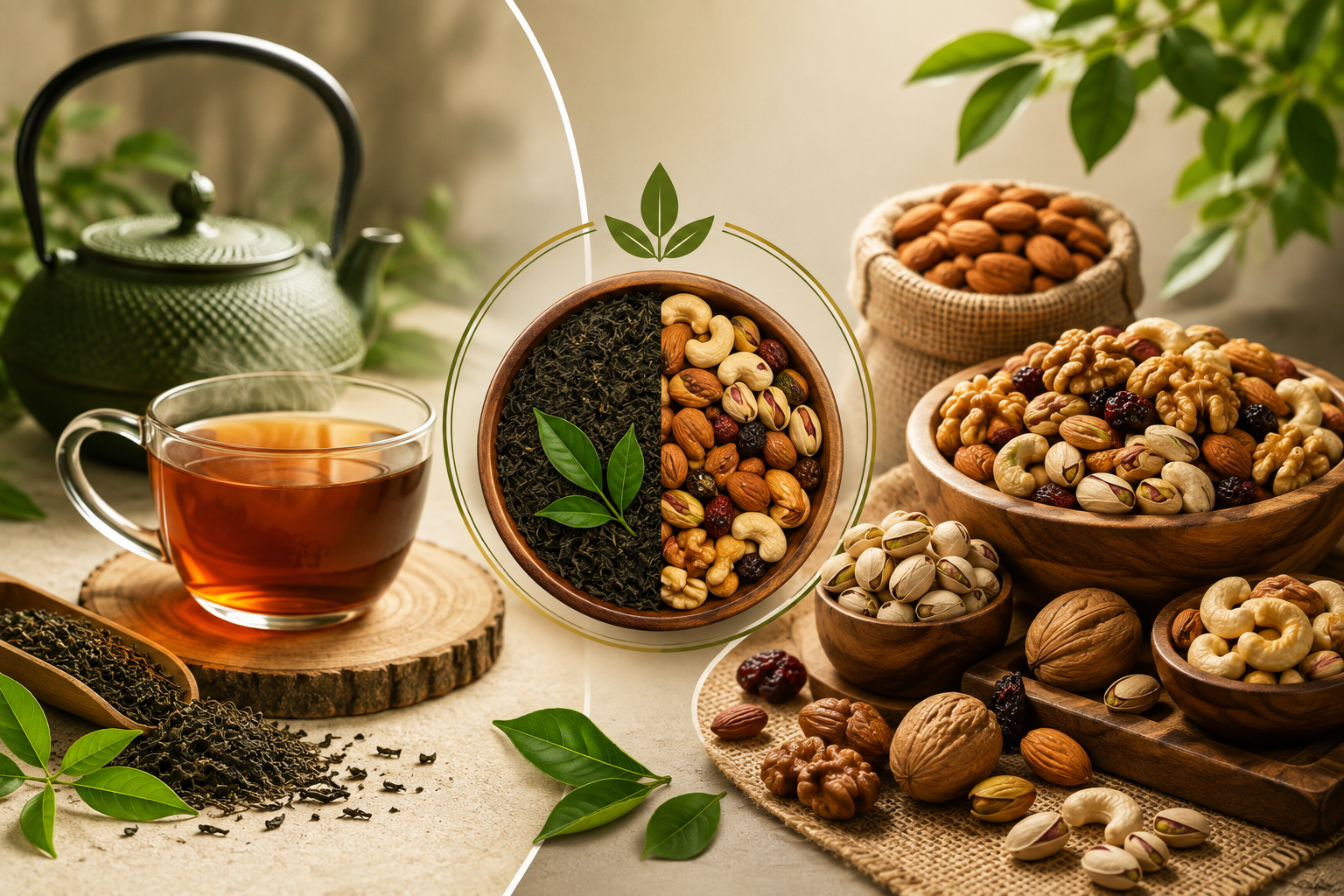
When it comes to everyday food choices, quality matters just as much as taste. Tea and dry fruits are often enjoyed as part of our daily routines—whether it is a morning cup of tea, an evening snack, a family gathering, or a thoughtful gift.
But with so many options available, how do you know which products are worth choosing?
The answer starts with quality.
Good-quality tea should offer a pleasant aroma, balanced flavour and freshness, while quality dry fruits should have a clean appearance, natural taste and appropriate texture. More importantly, proper sourcing, processing, packaging and storage can all influence the final product that reaches your home.
Here are some important reasons why you should pay attention to quality when choosing tea and dry fruits.
1. Quality Starts With Better Raw Ingredients
The journey of a good product begins long before it reaches the packet.
For tea, the quality of the leaves, their handling and processing can influence the aroma, colour, flavour and overall drinking experience.
Similarly, dry fruits depend on the quality of the nuts and dried fruits selected at the beginning of the process. Almonds, cashews, pistachios, walnuts, raisins and other products should be carefully selected and handled.
A good-quality product should have characteristics that are appropriate for its variety rather than simply looking attractive on the shelf.
The simple rule:
Better ingredients create a better foundation for the finished product.
2. Freshness Makes a Difference
Freshness is particularly important for products such as nuts and dry fruits.
Nuts naturally contain fats, and poor storage conditions can contribute to quality deterioration, including rancidity. Food-quality guidance identifies rancid nuts by characteristics such as an abnormal odour or taste, and some may develop a soft, oily or darkened appearance. (U.S. Food and Drug Administration)
For tea, freshness also matters because exposure to air, moisture, heat and unsuitable storage conditions can affect flavour and aroma. FSSAI guidance notes that air, light and heat can degrade the flavour of dried herbs and spices, which illustrates why proper storage is important for dried food products. (FSSAI)
This is why good packaging and appropriate storage aren’t simply about presentation—they help preserve the product’s characteristics.
3. Quality Protects Taste and Aroma
Think about opening a fresh packet of premium tea.
You notice the aroma before you even take the first sip.
The same principle applies to dry fruits. A good almond should have its characteristic crunch and flavour. Cashews should have an enjoyable texture and a pleasant taste. Pistachios should retain their distinctive flavour.
When products are poorly handled or stored for too long under unsuitable conditions, their sensory qualities can change.
For example, rancidity in nuts can produce unpleasant odours and flavours. (U.S. Food and Drug Administration)
Quality helps preserve the experience you expect when you open the pack.
4. Proper Storage Is Essential
Even excellent raw ingredients can lose quality if they aren’t stored correctly.
Moisture, heat, pests and contamination can affect food products during storage. FSSAI guidance recommends food storage areas that are dry, well ventilated and protected from contamination, with temperature and humidity controlled where necessary. (FSSAI)
This is particularly relevant for dry fruits because unsuitable storage can contribute to problems such as mould, insect infestation and deterioration.
At home, you can also help maintain quality by:
Keeping dry fruits in a clean, airtight container after opening.
Protecting them from excessive heat and moisture.
Following the storage instructions on the package.
Keeping the packaging properly sealed.
Checking the product before consumption.
Proper storage helps preserve the taste, texture and overall quality of your purchase.
5. Packaging Is More Than Just a Pretty Box
When choosing tea or dry fruits, packaging should not be judged only by its design.
Good packaging serves an important purpose: protecting the product.
It can help reduce exposure to environmental factors and maintain product quality throughout its shelf life.
When buying packaged food, look for important information such as:
Product name
Net quantity
Ingredient information
Batch or lot details
Manufacturing or packing information, where applicable
Best-before or use-by information
Storage instructions
Manufacturer or marketer details
Applicable food-safety information
FSSAI maintains regulations covering food-product standards as well as packaging and labelling requirements. (FSSAI)
So, before buying, take a few seconds to read the label instead of choosing only by appearance or price.
6. Quality Is About Consistency
Imagine buying your favourite tea today and getting a completely different taste the next time.
That can be disappointing.
A quality-focused brand aims to provide consistency from one purchase to the next.
For dry fruits, consistency can mean:
Similar product quality
Good sorting and selection
Appropriate packaging
Reliable storage
Consistent taste and texture
For tea, it can mean a dependable flavour and aroma that customers recognise and enjoy.
Consistency is one of the things that can turn a first-time buyer into a regular customer.
7. Quality Doesn’t Always Mean the Most Expensive Product
One common misconception is that the most expensive product is automatically the best.
That’s not necessarily true.
Instead of looking only at price, consider the overall value.
Ask yourself:
What ingredients are being used?
Is the product properly packaged?
Is the information on the label clear?
Is the product within its stated shelf life?
Does it have appropriate storage instructions?
Does the brand provide transparent product information?
Does the product meet your taste and quality expectations?
A slightly higher price may sometimes reflect better sourcing, processing, packaging or quality control—but the goal should be to find genuine quality at a fair value.
8. How to Choose Better Dry Fruits
When shopping for dry fruits, pay attention to their appearance, aroma, texture and packaging.
Almonds
Look for almonds that are clean, firm and have their characteristic flavour and texture.
Cashews
Good cashews should have a pleasant aroma and characteristic creamy texture. Avoid products with an unusual smell or obvious signs of deterioration.
Pistachios
Look for properly stored pistachios with a fresh, characteristic taste and no signs of mould or insect damage.
Walnuts
Because walnuts contain significant amounts of natural oil, freshness is especially important. An unusual stale or rancid smell is a warning sign.
Raisins
Look for clean, properly packaged raisins with a suitable texture and no obvious signs of spoilage.
The FDA’s food-quality guidance specifically recognises mould, insect damage, rancidity and other forms of deterioration as defects that can affect nuts. (U.S. Food and Drug Administration)
9. How to Choose Better Tea
When choosing tea, don’t focus only on the colour of the packet.
Consider:
Aroma
Fresh tea should have a pleasant and characteristic aroma.
Appearance
The appearance of the tea should be appropriate for its variety and processing style.
Flavour
A good cup should offer a balanced taste rather than an unpleasant stale or musty character.
Packaging
Tea should be packed in a way that helps protect its quality from moisture, air and environmental exposure.
Storage
Once opened, keep tea properly sealed and store it according to the product’s instructions.
A little attention before purchasing can make your everyday tea experience much better.
10. Quality Means Trust
Ultimately, buying quality food is also about trust.
When a brand clearly communicates what is inside the package, provides appropriate product information and pays attention to sourcing, processing, packaging and storage, customers can make more informed choices.
Food safety and quality standards exist precisely because consumers need confidence that food products are being manufactured, stored, distributed and sold according to applicable requirements. FSSAI states that its standards are intended to help ensure safe and wholesome food for consumers. (Food-O-Copoeia)
Quality You Can Taste
Tea and dry fruits may seem like simple everyday products, but their journey involves many stages—from selection and sourcing to processing, packaging, storage and finally your kitchen shelf.
Every stage can influence the final experience.
That’s why choosing quality isn’t just about buying a premium-looking packet. It’s about choosing products that are carefully selected, properly handled, thoughtfully packaged and stored appropriately.
At Sheetalshri, we believe that everyday food should bring together quality, taste and trust. Whether you’re enjoying a comforting cup of tea or reaching for a handful of almonds, cashews, pistachios or other dry fruits, choosing thoughtfully can make every bite and every sip more enjoyable.
Final Thought
Don’t just choose what looks good on the shelf. Choose what is good in the details.
Because when quality comes first, every cup tastes better and every handful feels worth choosing.
Comments ( 2 )
Comments are closed.
Est pellentesque elit ullamcorper dignissim cras. Pulvinar neque laoreet suspendisse interdum consectetur libero id faucibus. Aenean sed adipiscing diam donec adipiscing tristique risus nec feugiat.
At lectus urna duis convallis convallis tellus. Purus in mollis nunc sed id semper risus in hendrerit. Vitae et leo duis ut diam quam nulla porttitor. Porta nibh venenatis cras sed felis eget.