



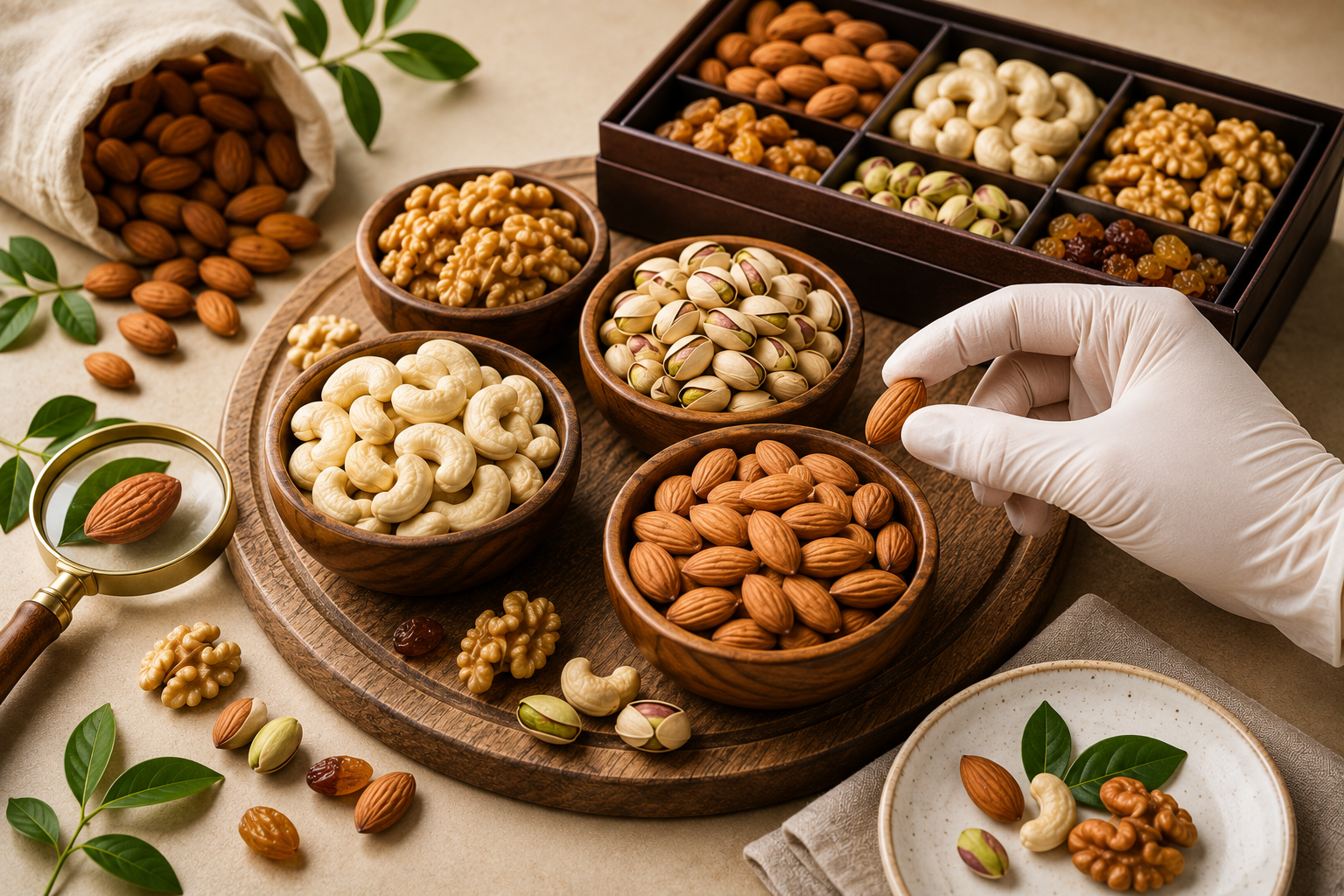
A Simple Guide to Choosing Premium Quality Dry Fruits
Dry fruits are a simple and delicious addition to everyday meals and snacks. Almonds, cashews, pistachios, walnuts, raisins, dates, and other dried fruits can be enjoyed on their own, added to breakfast, mixed into desserts, or used to create thoughtful gift hampers.
But with so many options available, how do you know whether you’re choosing premium-quality dry fruits?
Price and packaging alone don’t tell the whole story. Freshness, appearance, texture, aroma, sourcing, processing, and storage all matter.
Here is a simple guide to help you make a better choice.
1. Start With Freshness
Freshness is one of the most important things to consider when buying dry fruits.
Premium dry fruits should have a pleasant, natural aroma. They should not smell stale, oily, musty, or unusually strong.
For nuts such as almonds, cashews, walnuts, and pistachios, freshness is particularly important because their natural oils can become stale over time.
Tip: If the product has an unusual smell when you open the package, it’s better to avoid it.
2. Look at the Appearance
Good-quality dry fruits generally have a natural and appealing appearance.
For example:
Almonds should look firm and naturally brown.
Cashews should have a clean, creamy appearance.
Pistachios should have a natural green-to-yellow colour.
Walnuts should look fresh rather than excessively dark or shrivelled.
Raisins should look plump and naturally coloured.
Be cautious of products that look unnaturally bright or heavily processed.
The appearance should look natural rather than artificially enhanced.
3. Check the Texture
Texture can tell you a lot about the quality of dry fruits.
Premium nuts should generally have a satisfying crunch rather than feeling soft, rubbery, or excessively oily.
Raisins and other dried fruits should have a pleasant chewy texture without being excessively hard or sticky.
If you’re buying packaged products, check that the contents haven’t become compressed, damp, or clumped together.
4. Choose Products With Good Packaging
Packaging plays an important role in maintaining freshness.
Dry fruits should ideally be packed in packaging that protects them from:
Moisture
Air
Heat
Light
Contamination
Look for properly sealed packs without visible damage or signs of moisture.
A well-designed package isn’t just about appearance—it should help preserve the quality of the product inside.
5. Always Check the Label
Before buying packaged dry fruits, take a moment to read the label.
Look for important information such as:
Product name
Net quantity
Ingredients
Manufacturing or packing details
Best-before date
Batch information
Storage instructions
Food safety information
Manufacturer or packer details
A transparent label helps you understand exactly what you’re purchasing.
6. Check the Ingredients
For many dry fruits, a simple ingredient list is a good sign.
If you’re buying plain almonds, for example, you may expect the ingredient list to simply mention almonds.
Flavoured, salted, roasted, or coated products can naturally contain additional ingredients, so read the label to understand what has been added.
If your preference is natural snacking, look for products with minimal unnecessary additions.
7. Consider the Size and Grade
Not every large nut is necessarily better, but size and grading can be useful indicators when comparing products.
For example, cashews are often available in different grades and sizes. Larger, more uniform pieces may be preferred for premium snacking or gifting.
Similarly, whole almonds, pistachios, and walnuts can provide a more premium presentation than products containing a high proportion of broken pieces.
However, the best choice ultimately depends on how you plan to use them.
8. Look for Consistency
Premium-quality dry fruits should generally have reasonable consistency in:
Colour → Texture → Size → Freshness → Overall appearance
A packet containing mostly whole, clean, evenly processed pieces can provide a better experience than one containing excessive broken pieces, powder, or damaged nuts.
This is particularly important when buying dry fruits for gifting or serving to guests.
9. Don’t Choose Based on Price Alone
A higher price doesn’t automatically guarantee better quality.
At the same time, an unusually low price may deserve closer attention.
Instead of simply asking:
“Which one is cheapest?”
consider:
“What quality am I getting for the price?”
Compare quantity, grade, freshness, packaging, ingredients, and overall product quality before making your decision.
10. Buy According to Your Purpose
Different dry fruits work well for different occasions.
For Everyday Snacking
Choose simple options such as:
Almonds
Walnuts
Pistachios
Cashews
Raisins
For Breakfast
Try combining nuts and dried fruits with:
Oats
Cereal
Yogurt
Smoothies
Homemade granola
For Cooking
Cashews, almonds, raisins, pistachios, and other dry fruits can add flavour and texture to traditional dishes and desserts.
For Gifting
Look for attractive combinations, premium grades, clean packaging, and products with a good shelf life.
11. Buy From a Trusted Source
Where you buy your dry fruits matters.
A reliable brand or seller should provide clear product information and maintain appropriate packaging and storage practices.
Look for brands that are transparent about their products and provide essential information about quality, ingredients, packaging, and food-safety compliance.
Building a relationship with a trusted source can make buying dry fruits much easier over time.
12. Store Them Properly at Home
Even premium dry fruits can lose quality if they’re stored incorrectly.
After opening a pack, keep dry fruits in an airtight container and store them according to the product’s recommended storage instructions.
Keep them away from direct sunlight, excessive heat, and moisture.
For longer storage, some nuts may benefit from refrigeration, depending on the product and packaging instructions.
Good storage helps preserve their natural taste, aroma, and texture.
A Quick Checklist Before You Buy
Before adding dry fruits to your shopping basket, ask yourself:
✓ Does it look fresh?
✓ Does it have a natural aroma?
✓ Is the texture appropriate for the product?
✓ Is the packaging properly sealed?
✓ Is the ingredient list clear?
✓ Is the best-before information available?
✓ Is the product information transparent?
✓ Does the quality match the price?
✓ Is it from a trusted source?
If most of these boxes are checked, you’re on the right track.
Choose Quality, Enjoy Every Bite
Choosing premium dry fruits doesn’t have to be complicated. You don’t need to be an expert—you simply need to pay attention to freshness, appearance, texture, packaging, ingredients, labelling, and the reputation of the seller.
Whether you’re buying almonds for your morning routine, cashews for a family snack, pistachios for guests, or a beautifully packed dry-fruit combination as a gift, quality makes a noticeable difference.
At the end of the day, premium dry fruits are about more than just appearance.
It’s about opening the pack and enjoying freshness, natural flavour, satisfying texture, and confidence in what you’re serving.